Content Marketing Strategy: How to Attract and Convert Customers
Introduction
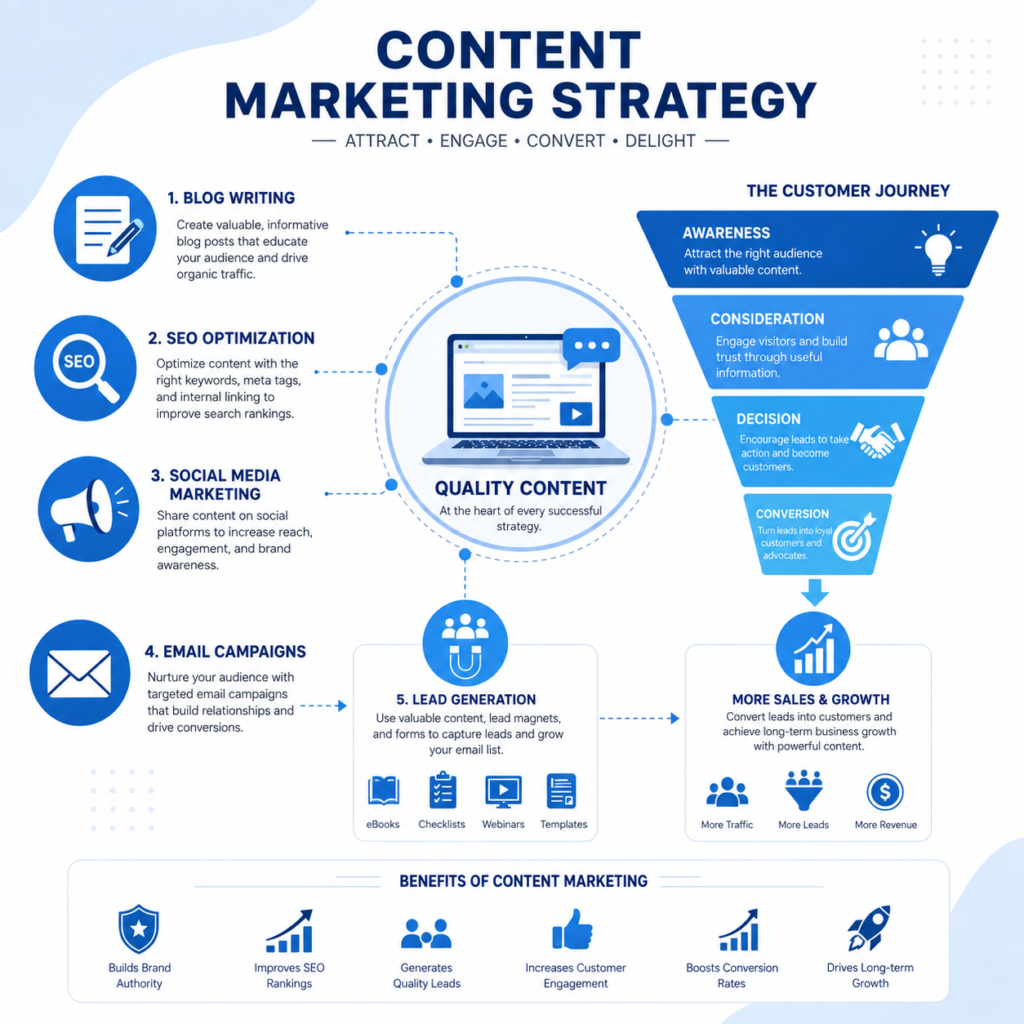
In today’s digital world, businesses need more than just advertisements to grow online. Customers no longer trust traditional marketing alone — they want valuable information, helpful solutions, and meaningful engagement before making a purchase decision. This is where content marketing becomes one of the most powerful strategies for attracting and converting customers.
A strong content marketing strategy helps businesses build trust, improve brand visibility, generate quality leads, and increase sales. Whether you run a startup, eCommerce store, or service-based company, creating valuable content can help you connect with your target audience effectively.
In this blog, we’ll explore how content marketing works, why it matters, and the best strategies to attract and convert customers successfully.
1. Understanding Content Marketing
Step 1: Define Your Target Audience
Before creating content, businesses must understand who their audience is.
Ask questions like:
What problems do customers face?
What information are they searching for?
Which platforms do they use most?
What type of content do they prefer?
Creating buyer personas helps businesses produce more relevant and engaging content.
Step 2: Perform Keyword Research
Keyword research helps identify what users are searching for online. Using the right keywords improves SEO and helps content rank higher on search engines.
Popular keyword research tools include:
Google Keyword Planner
Ubersuggest
Ahrefs
SEMrush
Focus on:
Long-tail keywords
User intent
Search volume
Competition level
Step 3: Create High-Quality Content
Quality content is the foundation of successful marketing.
Good content should:
Solve customer problems
Be easy to understand
Include visuals and examples
Be SEO optimized
Provide actionable insights
Consistency is also important. Businesses should publish content regularly to maintain audience engagement.
Step 4: Use Multiple Content Channels
Different users consume content differently. Businesses should distribute content across multiple platforms, including:
Websites and blogs
Instagram and Facebook
LinkedIn
YouTube
Email marketing
WhatsApp marketing
This increases reach and improves brand awareness.
Step 5: Add Strong Call-To-Actions (CTAs)
Every piece of content should guide users toward the next step.
Examples:
Contact us today
Download our free guide
Book a free consultation
Subscribe to our newsletter
A clear CTA improves lead generation and conversion rates.
4. Best Content Types for Customer Conversion
Educational Blog Posts
Blogs help businesses answer customer questions and improve SEO performance.
Case Studies
Real success stories build credibility and trust among potential customers.
Video Content
Videos increase engagement and explain complex topics more effectively.
Email Marketing
Personalized email campaigns help nurture leads and maintain customer relationships.
Social Media Content
Short-form content increases reach and keeps audiences connected with the brand.
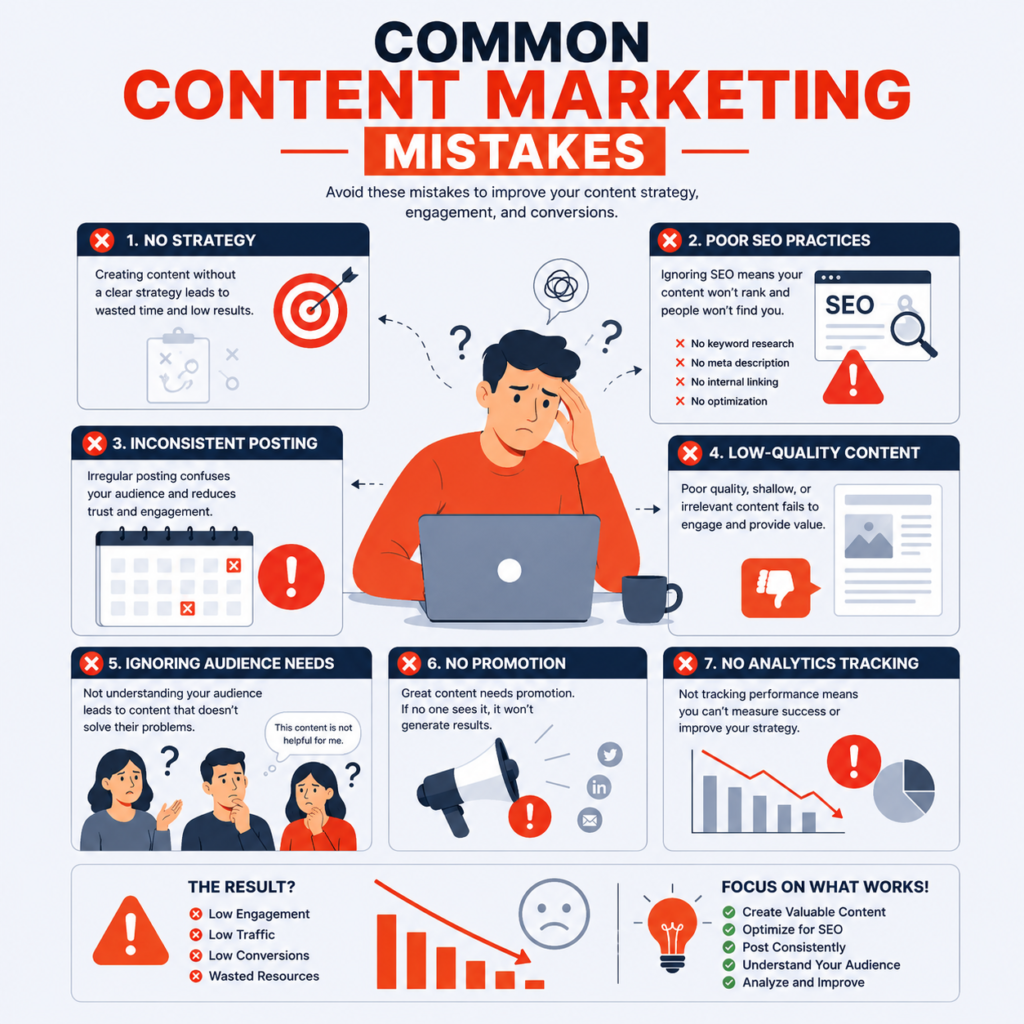
5. Common Content Marketing Mistakes to Avoid
Many businesses fail to achieve results because of avoidable mistakes.
Common mistakes include:
Publishing low-quality content
Ignoring SEO optimization
Inconsistent posting
Not understanding the target audience
Lack of analytics tracking
Weak call-to-actions
Avoiding these mistakes can significantly improve marketing performance.
6. Measuring Content Marketing Success
Businesses should regularly track performance metrics to improve their strategy.
Important metrics include:
Website traffic
Bounce rate
Engagement rate
Lead generation
Conversion rate
Social shares
Email open rates
Analytics tools like Google Analytics and Search Console help monitor content performance effectively.